
Sacred Spaces

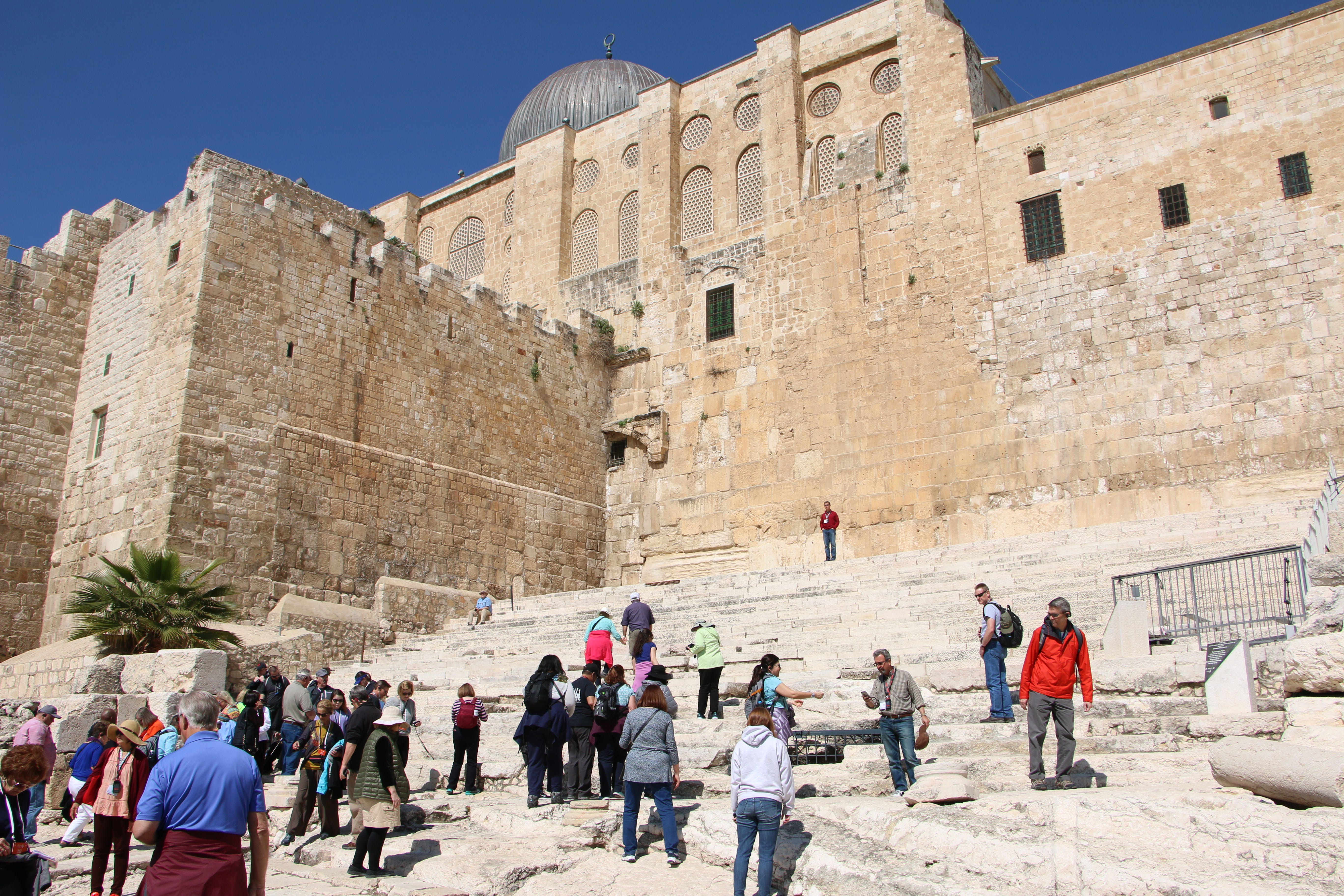
Security wasn’t concerned about the camera I carried, but rather the microphone attached to it. I don’t it was because of the microphone cover1 or if microphones are somehow used to smuggle dangerous items. I didn’t want to pry because when you are passing through a security checkpoint at one of the three sacred spaces in Islam, answering questions from military guards with large guns, you just sort of listen to them and leave behind whatever equipment they ask you to.
The Temple Mount in Jerusalem, known in Islam as al-Aqsa. You quickly pick up on a startling dichotomy when visiting this sacred space that has been contested for thousands of years. It is an experience that will stay fresh in my mind for the rest of my life.
On one end of the mount, you have ancient steps: the spot where Jewish teachers instructed their students during visits to the temple. Very little remains from that old temple other than these steps. It was on these steps roughly 2,000 years ago that a teacher stood with his followers, pointed at a graveyard across a nearby valley, and used the white-washed tombs as an object lesson that the religious leaders of the day didn’t enjoy2. This revolutionary man was making a point, but many missed the point because he wasn’t the type of revolutionary they wanted him to be, which angered them. They took matters into their own hands, putting him to death and then trying to stand up to Rome themselves. The Empire responded by destroying Jerusalem and its temple. That teacher they executed is still followed to this day3. I don’t think things went the way those religious leaders expected them to go.
That insurrection of 70 A.D. resulted in the destruction of the temple, but led to the next interesting side of the Temple Mount: the Western Wall. This is the only section of wall that was preserved from the platform the temple once lived on, which thereby makes it the most sacred spot in all of Judaism. It’s estimated that on average, tens of thousands of people visit this relatively tiny section of wall every day in order to pray, as they believe that the ancient Holy of Holies once sat directly above this section of wall. The Holy of Holies, of course, was the place where God Himself would come down to physically dwell with His people in those ancient days.
Of course, something wildly different now sits above that wall and has for over 1,300 years. This is where I passed through a security checkpoint, leaving behind my microphone, and found myself in the al-Aqsa compound. al-Aqsa is one of the three Islamic Holy Sites, where the al-Aqsa mosque and The Dome of the Rock stand. This place, according to Islamic tradition, is where the prophet Muhammed was taken into the heavens, given a glimpse into the afterlife, and then returned to spread his message. The two buildings that occupy this location are stunning in their own unique ways, though of course the Dome of the Rock grabs your attention with its elaborate design and the way it reflects the sun. It’s a marvel for anyone to behold, regardless of belief.
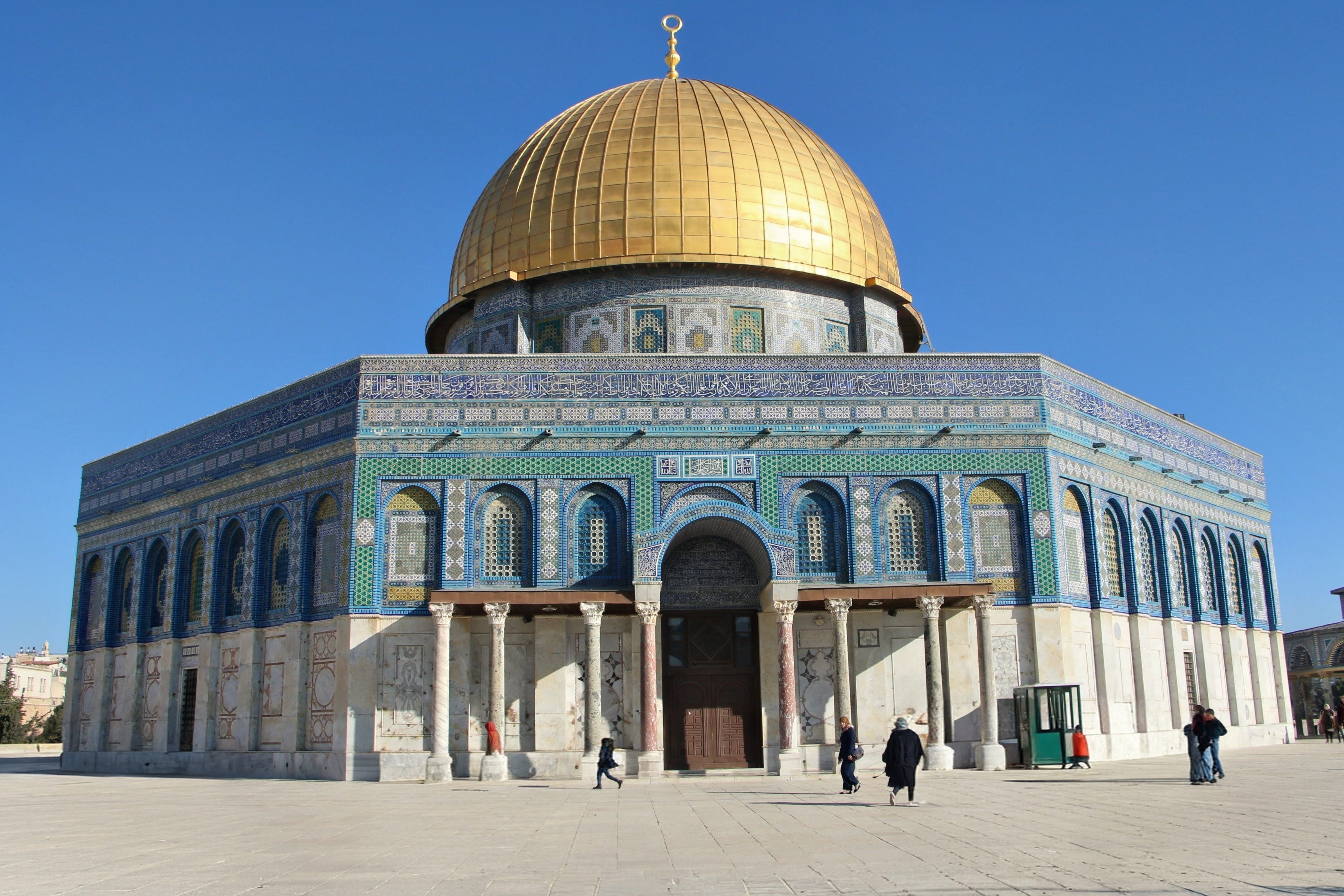
Two faiths intersect at this very particular geographical location, one believing it is where God came down to man, the other believing it is where a man was taken up to meet God. Meanwhile, roughly 2,000 feet away from all of this is a building called the Church of the Holy Sepulcre, held by many to be the holiest location in Christianity. Three sacred locations for three different religions are a five-minute walk from each other. Trust me, you can feel the tension deep in your bones while you stand in these sacred spaces.
Every important location has its opportunistic residents, of course. Since our group was not Muslim, we weren’t allowed into either of these stunning buildings at al-Aqsa, but a quirky local man got our attention to wave us over to the side of the mosque. He had spotted an open window and wanted to give us the opportunity to peer inside. I have no idea if this was a big deal or this was totally allowed and we only felt nervous because of the amount of armed guards who patrolled the area, but we thanked the man for helping us and (naturally) he accepted tips.
That’s what really stands out to me about sacred spaces and holy ground. I’ll always question if there really can be something more special, more holy, or more divine about a simple location or an object. In the span of one day I walked through the grounds of al-Aqsa and stood with my head covered in reverence at The Western Wall, and all I could really feel was the conflict that has defined these locations for thousands of years. Wars have been fought over this land and these places and when I visited nine years ago, they were fiercely guarded by this strange idea that the most divine needed human protection. I can’t imagine what things are like in Jerusalem now.
I could write thousands of words about my visit back in 2017, and I’m sure I have and still will, but the biggest thing I walked away from was a de-mystifying familiarity with God and Jesus and faith. Don’t get me wrong: I believe in the spiritual aspect of the physical world more now more than I ever did before, but I don’t think it is the big mystery that we want it to be. Jesus spoke in parables, but they weren’t wise sayings that only the deeply enlightened could understand. He spoke very plainly to the people who gathered on the steps to the Temple Mount and listened, using words and metaphors that they would immediately understand. He pointed to whitewashed tombs and compared them to religious leaders and there was no mystery in that. He was speaking very plainly, very directly, and that’s the thing that stayed with me in the years since I made that pilgrimage.
I visited holy sites from three major religions and took away a new appreciation for practicality. Some places or things that we view as holy and sacred are only as holy and sacred as we allow them to be. They are powerful because we want them to have power over us.
Maybe our focus is supposed to be on the Power, not the places or things.
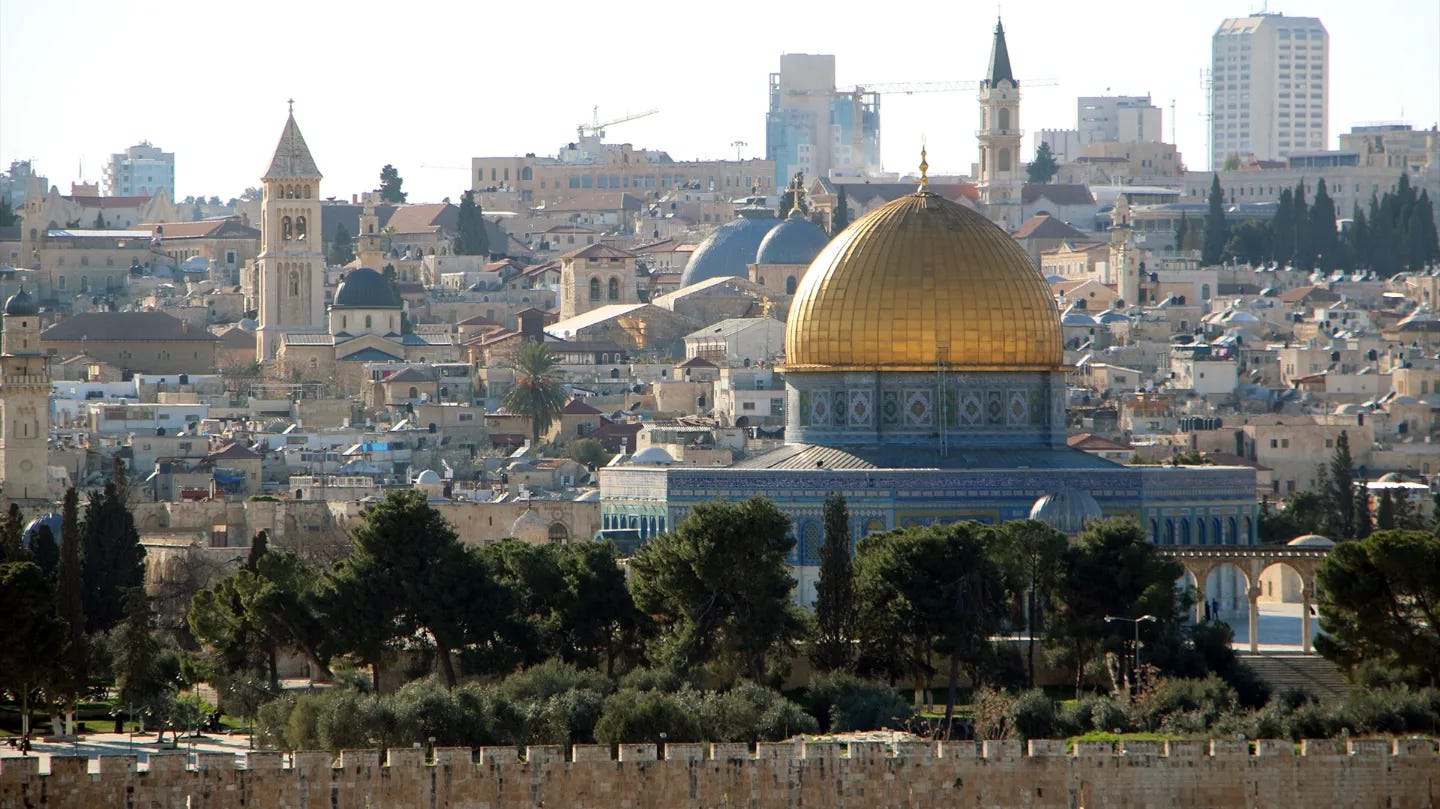
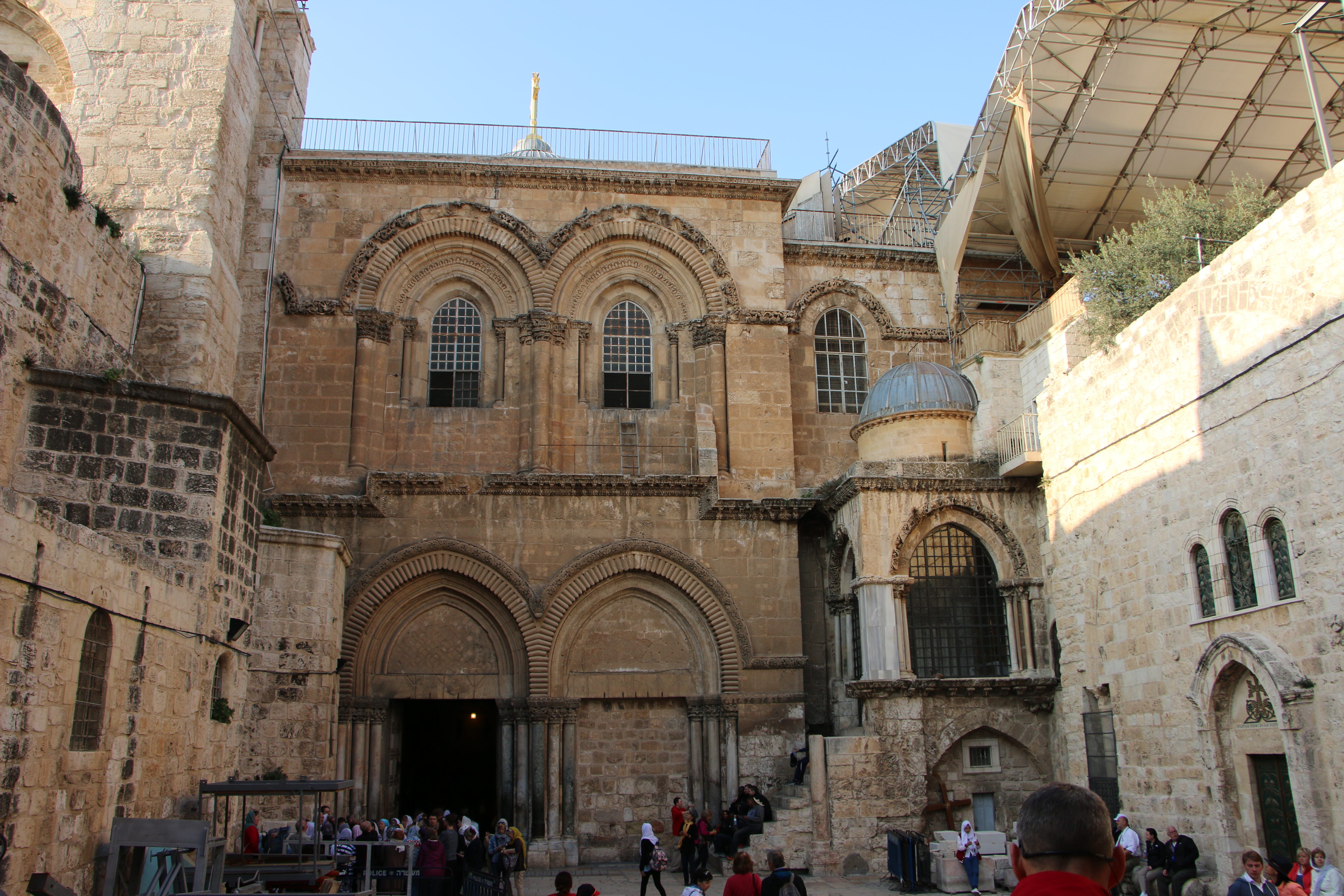
The Church of the Holy Sepulcre lacks exterior luster compared to the Dome of the Rock, but the interior is elaborate and beautiful. The building is primarily oriented around two points of interest on opposite sides. Christian tradition says that one end is the place where Jesus was nailed to the cross and crucified, the other end is where his body was afterward buried. This is what designates it as the holiest of locations for many Christians4.
Just because it’s a holy site doesn’t make it exempt from church politics, though. Six denominations5 share stewardship of the site though an agreement known as the Status Quo. Each denomination has areas and responsibilities and aren’t supposed to infringe on the areas or responsibilities of the others. This has led to tons of misunderstandings over the years, the most visible of which being the Immovable Ladder.
Sometime in the early 1700s, a ladder appeared outside of a window, and debates have waged over who put it there or what the purpose was. Was it a contractor repairing the window? An Armenian monk who used it to gather things from the outside ledge? Whatever the reason, there was no clarity on who owned the ladder, who owned the window, or who owned the ledge that the ladder sat on. So, in a symbolic gesture signifying the importance of the Status Quo, the ladder has stayed in its spot, untouched for hundreds of years.
I have been Protestant my entire life. You might notice that “Presbyterian Church of America” is absent from the list of denominations in charge of The Holy Sepulcre. The church tradition I grew up in, am most familiar with, and still primarily gravitate toward, is (ironically) not a huge fan of “tradition”, at least not in the way Catholicism or Orthodoxy means it. The only reason I point this out now is that I have been incredibly fortunate to find myself in places where I can experience and explore these ancient traditions, finding a lot more respect for them in my adult years.6 Even without knowing what was said, I truly worshiped at the chapel tradition says was the spot of the Crucifixion.
I returned from that trip with two Icons. I still have to confess that despite my better understanding of traditions, Icons are still a bit of a mystery to me. I feel a strange urge to capitalize the word although I don’t know why. I guess so nobody confuses the religious icons with, I don’t know, a general term for a celebrity? Hopefully the overall context of this post made that clear, but like I said: I really don’t know how to treat Icons. I had always been taught that I didn’t need an Icon’s permission to pray, but that I could simply talk to God myself.
Whenever we visit my Orthodox in-laws at their home in Washington (the state), we stay in their house which has as many Icons on the wall as it does family photos7. I can figure out who many of the figures are that are depicted in the iconography, though it does help that some of them are labeled. Some of them, if I’m honest, make me think of the animated scenes in Monty Python and the Holy Grail, which I doubt was their intended purpose.
I acquired one icon in Bethlehem, at a little place we stopped for lunch. I forget exactly what it looks like now, but I remember it being very pretty with golden art on the front and a certificate on the back explaining that it was made from authentic Bethlehem Olive wood. It was a gift for my future mother-in-law, which is pretty funny looking back because I was getting her a gift in a category she knew much more about than I did. I don’t really recall enough about it (besides it being small enough to fit in your palm) to be able to scour her house and see if she actually still has it, but that’s perfectly fine.8 I believe the attempt was enough to send a message that I wanted to relate to her.
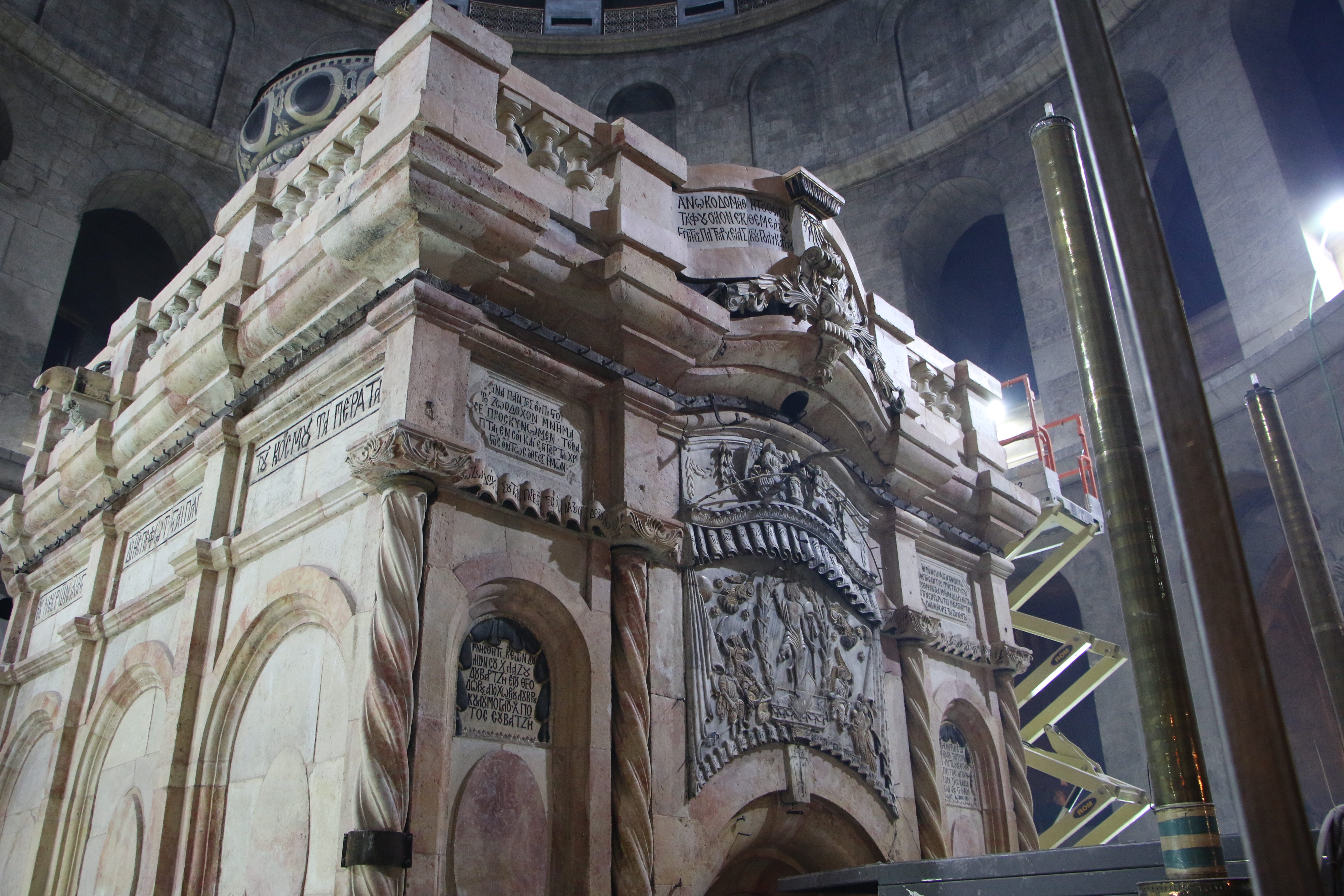
The other Icon was acquired in the Church of the Holy Sepculre, right next to the mausoleum honoring the traditional burial place of Jesus. It’s a lovely, ornate construction on top of the supposed burial place, and a priest sits on the back side with icons and a small alter for prayer. My group had left the church already, but I asked to walk back in and visit that alter. For some reason the group leader agreed, and I wandered through this section of Jerusalem by myself to re-enter the church.
The priest seemed more confused than anything else by my presence, but he kindly let me buy and pray over an Icon. Specifically, I prayed for my upcoming marriage and my wedding that would take place on July 8th of that year9, and while I don’t really believe there’s anything special about that little icon or even the altar where I prayed over it, I think it’s all very special because of the deliberate action I took in that moment. The Icon and the place are special to me because I want them to be.
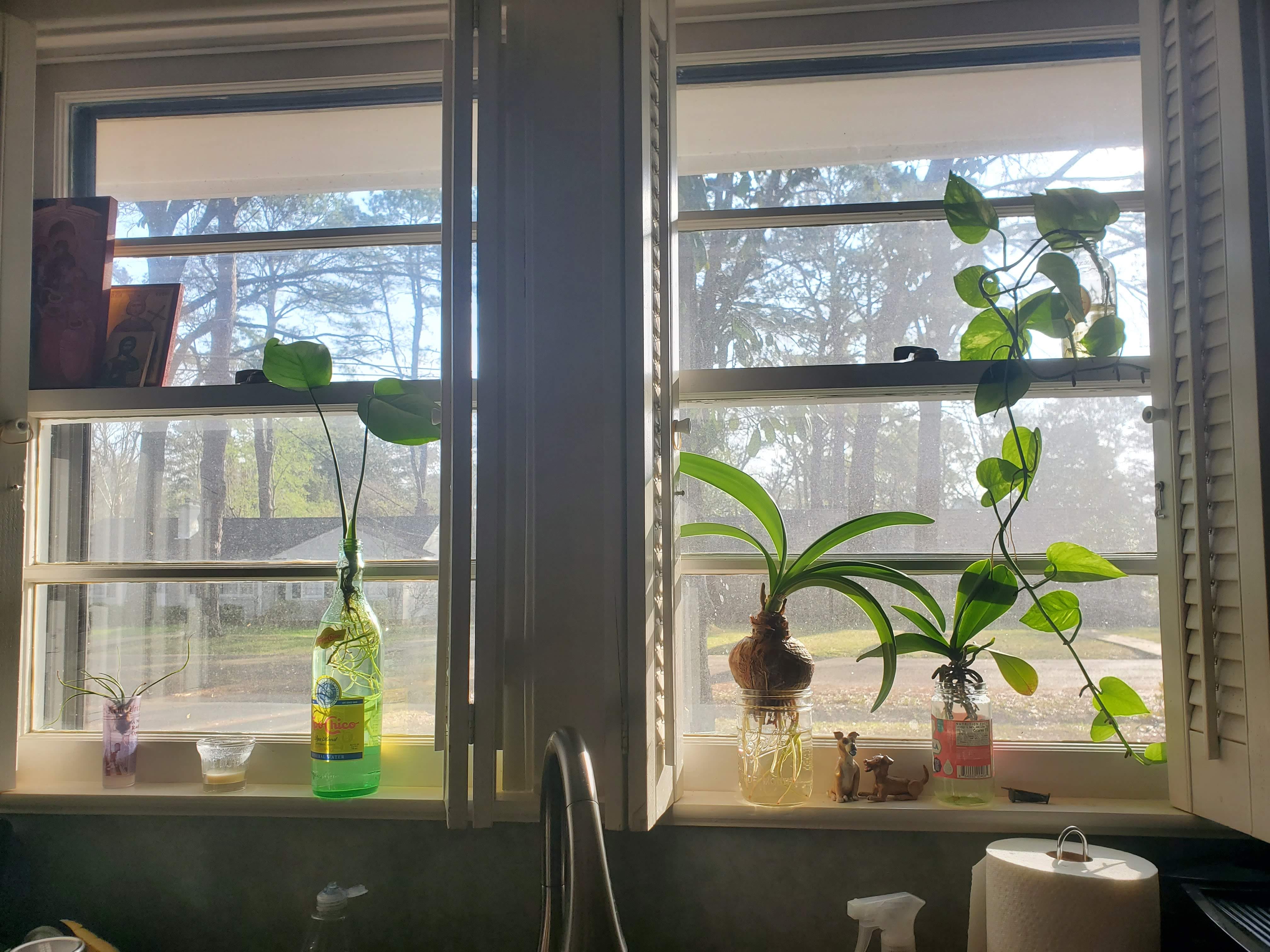
My most sacred space is my kitchen window. I start every morning looking out of it, admiring the front yard and my neighborhood as I perform the most sacred act of all: brewing coffee. That Icon looks over me, nestled in the top left window pane, serving as a lasting memento of that pilgrimage and that moment I spent in prayer. Much to the Icon’s chagrin, I do spend my time in the morning talking directly with God, but I still credit the Icon with its help in my marriage as well. It’s a reminder, sure, of the vows I took years ago and of the prayers I prayed to keep the vows strong. I like to believe, despite my uncertainty of what an Icon is supposed to be, that there is a little prayer energy stored up in that thing that keeps us going during our longer days.
The Western Wall, al-Aqsa, and the Holy Sepulcre are all physical places that are sacred to the people who visit them because each of them signifies a moment that God and man connected. They are important because they symbolize man’s relationship with God. The problem with viewing them that way is that it almost puts a distance between God and man that I don’t believe is there. They’re beautiful places to be sure, and you feel the gravity when you visit them, but God is just as present when I make my coffee as any other time He makes himself known.
The most holy and sacred of places are not physical spaces, but wherever that relationship exists. Sacred places, wherever they may be, are born out of the relationship that comes from God and how we carry that relationship with us.
A fuzzy windscreen colloquially referred to as a “dead cat”, although I don’t believe any of them have ever been made of this material.
This story starts in Matthew 21:23 and runs though chapter 23, if you’d like to read about it.
Oftentimes very poorly and still very misunderstood.
Many Catholics would argue that the Vatican is holier. Many Southern Baptists will argue that their favorite college football stadium is.
The Greek Orthodox Church, Roman Catholic Church, and Armenian Apostolic Church are the primary custodians, with the Coptic Orthodox Church, Syriac Orthodox Church, and Ethiopian Orthodox Church having minor rights as well. Basically, don’t ever let anyone tell you that their denomination is the “true” church, there’s always somebody else with the exact same claim.
It’s been very popular recently for people in my generation or younger to flock to Catholicism or Orthodoxy in search of a deeper connection to ancient tradition, something they feel is more “real” or grounded because it’s old. That’s a fascinating trend, a direct reaction to a weak modern American church culture that isn’t rooted in truth or anything substantial at all, but this is all a different post for another time.
There’s probably more icons than family photos, but I haven’t counted.
Ironically enough, after drafting this post, we visited her house and I actually did find the Icon I brought back for her. So I must not have done TOO badly with my gift.
Surprise! This entire post was actually about my anniversary all along. Happy 9th Anniversary, Ellie! I love you very much.